Social/Email
Showcase
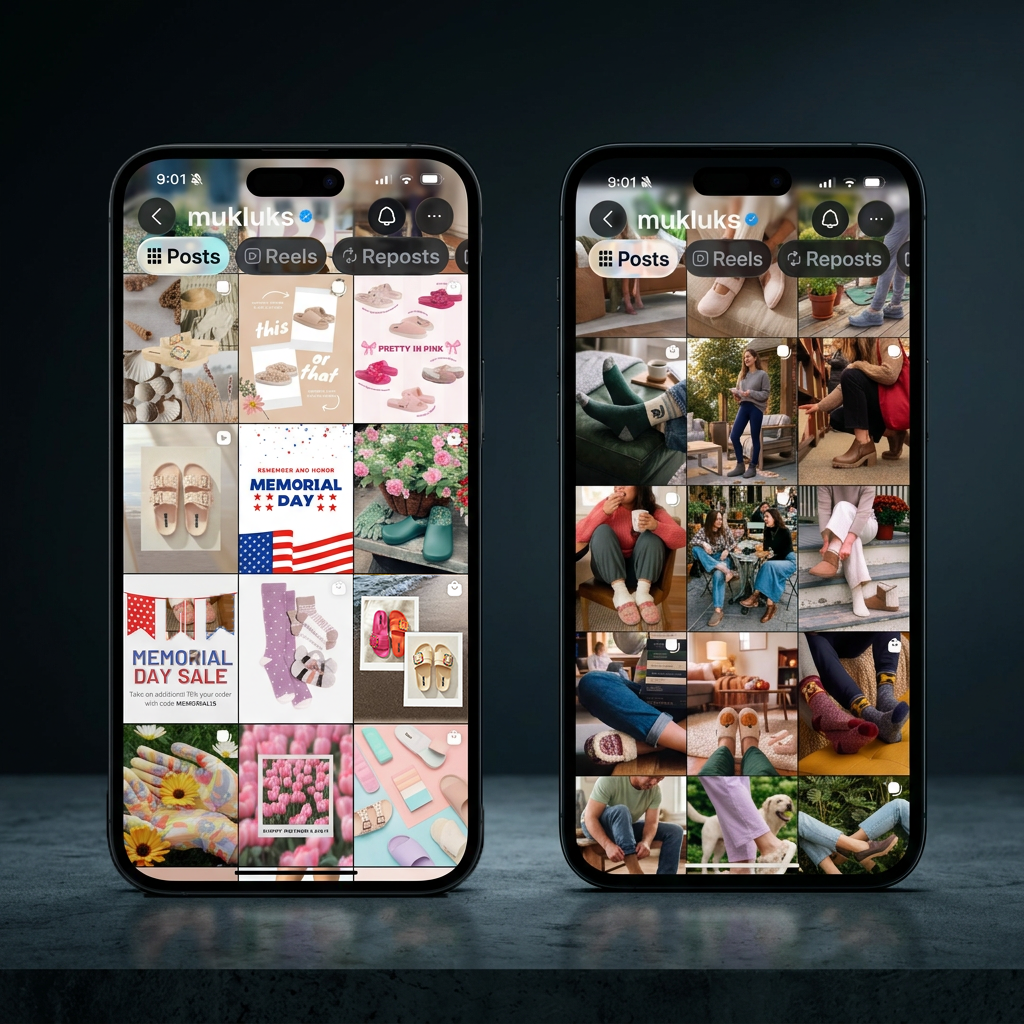
The brand had a sizable social audience of nearly 29.5K followers, but engagement had become almost nonexistent, with posts routinely receiving just 0–4 likes and little to no commenting or sharing. The content was heavily product-focused, making the social feed feel more like a continuous stream of advertisements than a place people wanted to engage with. At the same time, email performance had been trending downward since 2023. I led a broader content and performance initiative to address both problems, shifting social from product promotion to lifestyle storytelling while using data analysis to identify opportunities for improving email revenue.
From Product Promotion to Brand Participation
Reframing social and email strategy to rebuild engagement, expand reach, and reverse a declining sales trend
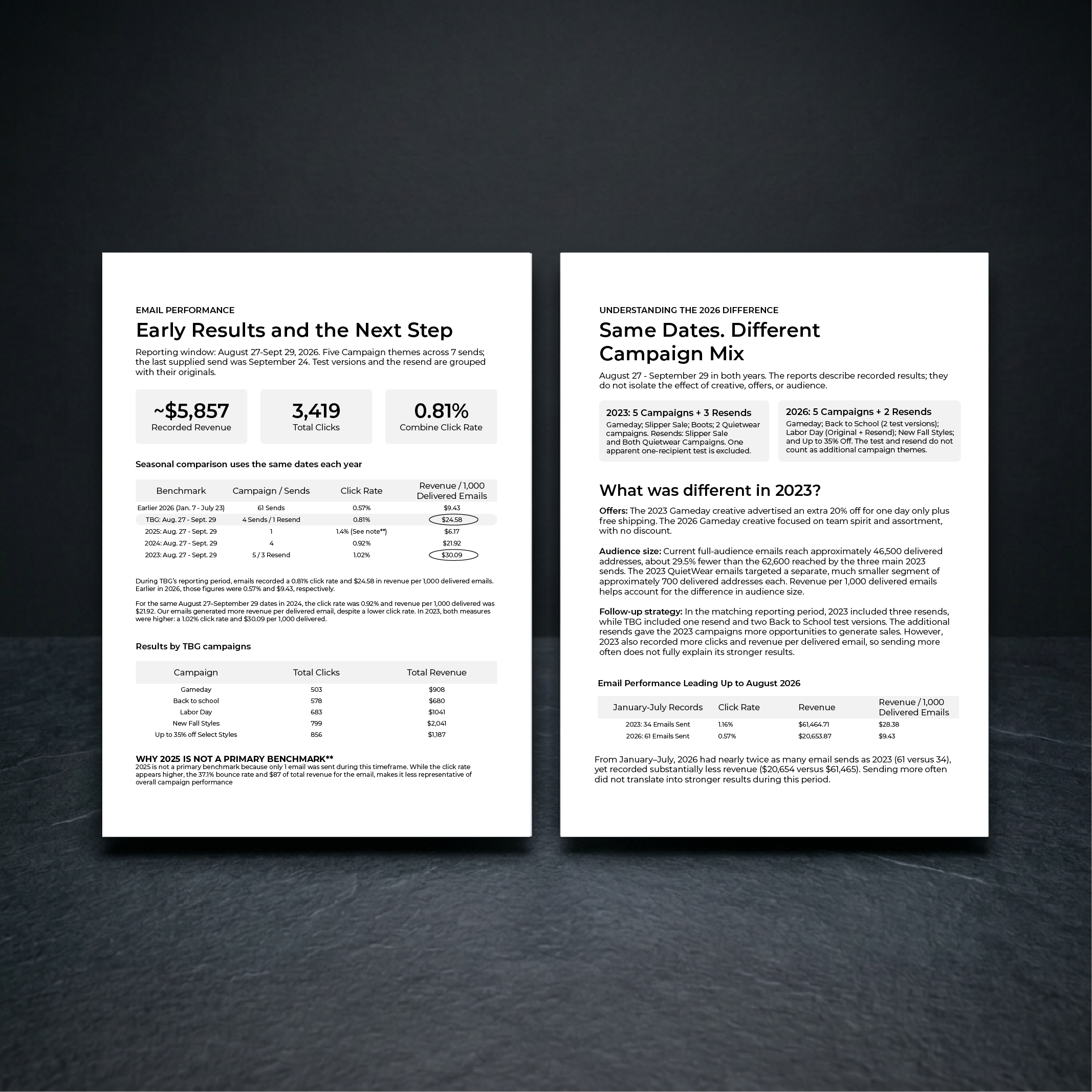
Reversing the Email Decline
Social wasn't the only channel that needed a strategic reset. Email revenue had been trending downward since 2023, so I led an analysis of 140 emails spanning 2023–2026 to identify patterns in what was contributing to stronger or weaker sales performance.
Using a one-way ANOVA, I evaluated different elements of email performance and looked for meaningful patterns across the sample. The analysis supported testing clearer discount messaging in the 26–50% range, while emails without GIFs, subject-line emojis, and strikethrough pricing also performed better within the sample. Rather than treating any single element as a guaranteed solution, the analysis showed that email performance was influenced by a combination of factors, giving us a more informed foundation for future testing.
Letting the Data Shape the Content
The new social direction launched in August 2026, and the early results showed a significant change in audience behavior. Average engagement increased from 3.5% in July to 12.2% in August, a 3.5× increase. August giveaway content reached an even higher 19.35% engagement rate, providing an early indication that the audience was responding to content designed for participation rather than passive product exposure.
The shift wasn't simply about creating prettier content. It was about changing the role of the brand in the feed, from asking people to buy something to giving them a reason to interact with the brand in the first place.
Making Social Feel Less Like an Ad
The first opportunity was to fundamentally rethink what the social channel was for. Instead of using graphics to tell followers what shoes and slippers were good for, I shifted the strategy toward lifestyle-first photography and video, allowing the products to become part of the story rather than the subject of the advertisement. The goal was to create content people could relate to, save, share, and engage with naturally.
We also began using Instagram stories strategically, incorporating sticker links that connect products directly to the website without disrupting the lifestyle-focused feed. Influencer content was introduced alongside this approach to broaden reach, bring new perspectives into the brand's content ecosystem, and support follower growth.